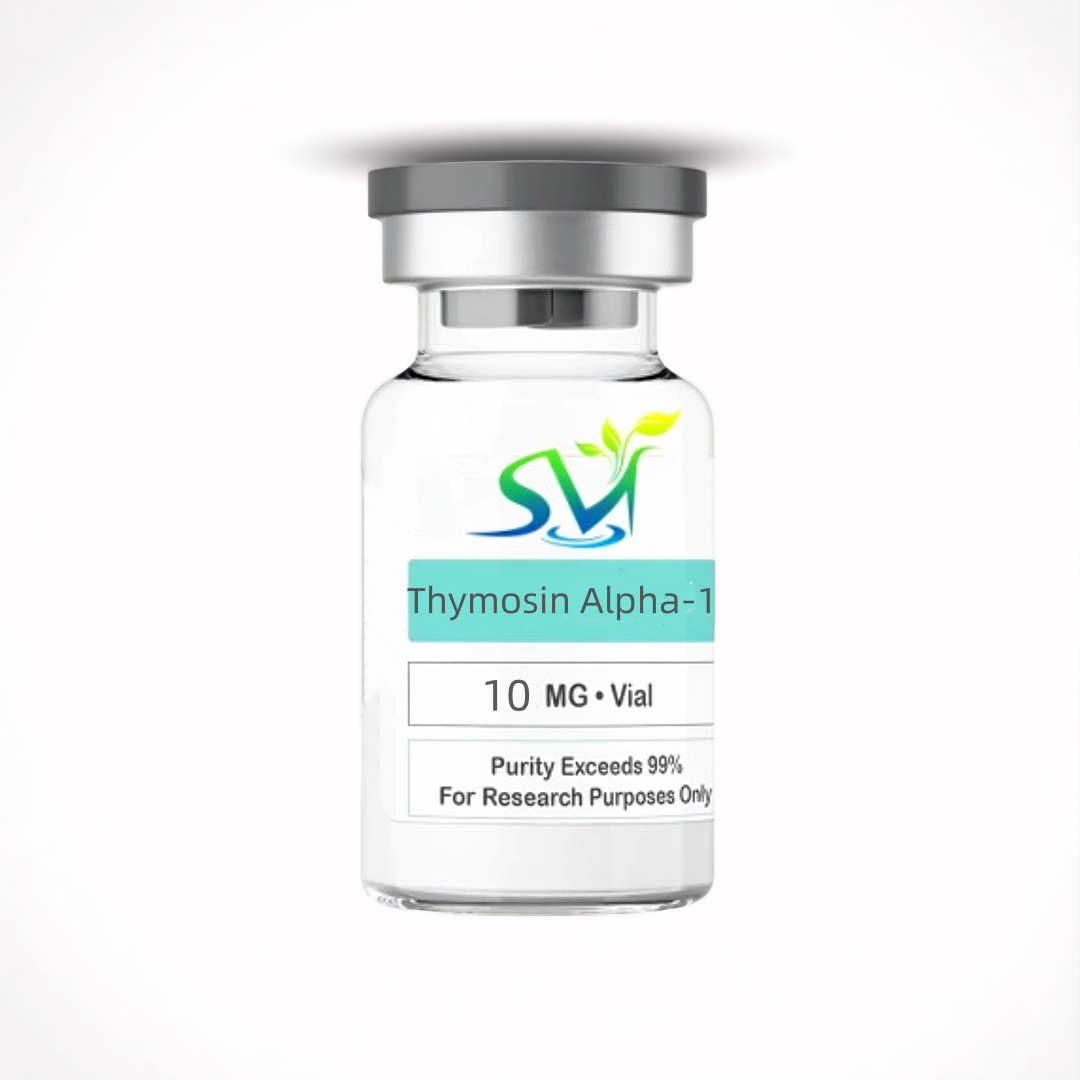
Thymosin Alpha-1: The Master Regulator of the Immune System
In the complex world of immunology, achieving balance is everything. An overactive immune system can lead to autoimmune disorders, while an underactive one leaves the body vulnerable to infections and cancer. Thymosin Alpha-1 (Tα1), a naturally occurring peptide, has emerged as a key player in fine-tuning this delicate balance. With over 30 years of clinical research, it is one of the most well-studied peptides for supporting immune function. This guide delves into the science, approved uses, and potential of Thymosin Alpha-1.
What is Thymosin Alpha-1?
Thymosin Alpha-1 is a 28-amino-acid peptide that is naturally produced by the thymus gland, a primary organ of the immune system.
-
Origin: It was first isolated from thymosin fraction 5, a bovine thymus extract.
-
Primary Function: Its main role is to modulate and enhance immune function. It doesn’t simply “boost” the immune system; it helps regulate it, making it more effective and balanced.
-
Status: It is an approved drug in many countries (sold under brand names like Zadaxin) for specific conditions.
How Does Thymosin Alpha-1 Work? The Mechanism of Action
Tα1 works through multiple sophisticated pathways to orchestrate a more robust and precise immune response.
-
Stimulates T-Cell Production & Maturation: It promotes the differentiation and maturation of T-lymphocytes (T-cells) in the thymus. T-cells are the “special forces” of the adaptive immune system, critical for targeting specific pathogens and cancer cells.
-
Enhances Dendritic Cell Function: It improves the function of dendritic cells, which are “antigen-presenting cells.” These cells act as scouts, capturing invaders and presenting them to T-cells to initiate a targeted attack.
-
Modulates Cytokine Production: It helps balance the production of key signaling molecules called cytokines (e.g., Interferons, Interleukins). This helps reduce harmful inflammation while promoting an effective defensive response.
-
Boosts Natural Killer (NK) Cell Activity: It increases the activity of NK cells, which are responsible for identifying and destroying virus-infected cells and cancer cells.
Proven Clinical Applications and Uses
Thymosin Alpha-1 has been extensively studied and is officially approved in several countries for the following:
-
As an Adjuvant for Vaccines: It is used to enhance the immune response to vaccines, particularly in immunocompromised individuals like the elderly.
-
Chronic Viral Infections:
-
Hepatitis B and C: It is a well-established treatment to help clear the virus and improve liver function.
-
-
Cancer Immunotherapy: It is used as an adjunctive therapy for certain cancers to strengthen the patient’s immune system during conventional treatments like chemotherapy.
-
Immunodeficiency Conditions: It is used to treat patients with primary immunodeficiency diseases or secondary deficiencies.
“Off-Label” and Investigational Uses (Emerging Research)
Due to its powerful immunomodulatory effects, Tα1 is being researched for:
-
Severe Sepsis & COVID-19: Studies have investigated its potential to modulate the dangerous “cytokine storm” associated with severe sepsis and critical COVID-19 cases.
-
Autoimmune Diseases: Paradoxically, by restoring immune balance, it may have therapeutic potential in certain autoimmune conditions where the immune system is dysregulated.
-
As a General Immune Support: In the wellness and longevity space, it is sometimes used to help “reset” immune function, especially in cases of age-related thymic involution (the natural shrinking of the thymus gland with age).
Thymosin Alpha-1 vs. Thymosin Beta-4
It’s crucial not to confuse these two distinct peptides:
-
Thymosin Alpha-1 (Tα1): Primarily immunomodulatory. Its main focus is on regulating T-cells and the adaptive immune system.
-
Thymosin Beta-4 (TB-500): Primarily involved in wound healing, tissue repair, and actin regulation. It promotes cell migration, angiogenesis (new blood vessel formation), and reduces inflammation in damaged tissues.
Safety, Side Effects, and Important Considerations
Thymosin Alpha-1 has an excellent safety profile in clinical studies when used at prescribed doses.
-
Side Effects: They are generally mild and rare. They can include temporary injection site reactions (redness, discomfort) and, very rarely, mild fatigue or nausea.
-
Crucial Disclaimer: Thymosin Alpha-1 is a potent prescription drug. It should only be used under the supervision of a qualified physician for a diagnosed condition.
-
Purity and Sourcing: As with any peptide, obtaining it from unreliable sources carries significant risks of contamination or incorrect dosing.
Frequently Asked Questions (FAQ)
-
Is Thymosin Alpha-1 a steroid?
-
No. It is a peptide, not a steroid. It works by modulating the immune system directly, not through hormonal pathways.
-
-
Can I use Thymosin Alpha-1 for long-term immune support?
-
This is a decision that must be made with a medical professional. While it is well-tolerated, its long-term use for general wellness is not an officially approved indication and requires careful medical oversight.
-
-
How is Thymosin Alpha-1 administered?
-
It is typically administered via subcutaneous (SubQ) injection.
-
A Pillar of Immunotherapy
Thymosin Alpha-1 stands as a testament to the power of targeted immunotherapy. With decades of robust clinical data supporting its safety and efficacy for specific immune-related conditions, it remains a cornerstone treatment. Its potential for broader applications continues to be explored, solidifying its role as a master regulator for achieving a healthy, balanced immune system.